
18 Movement Games and Activities for Preschoolers
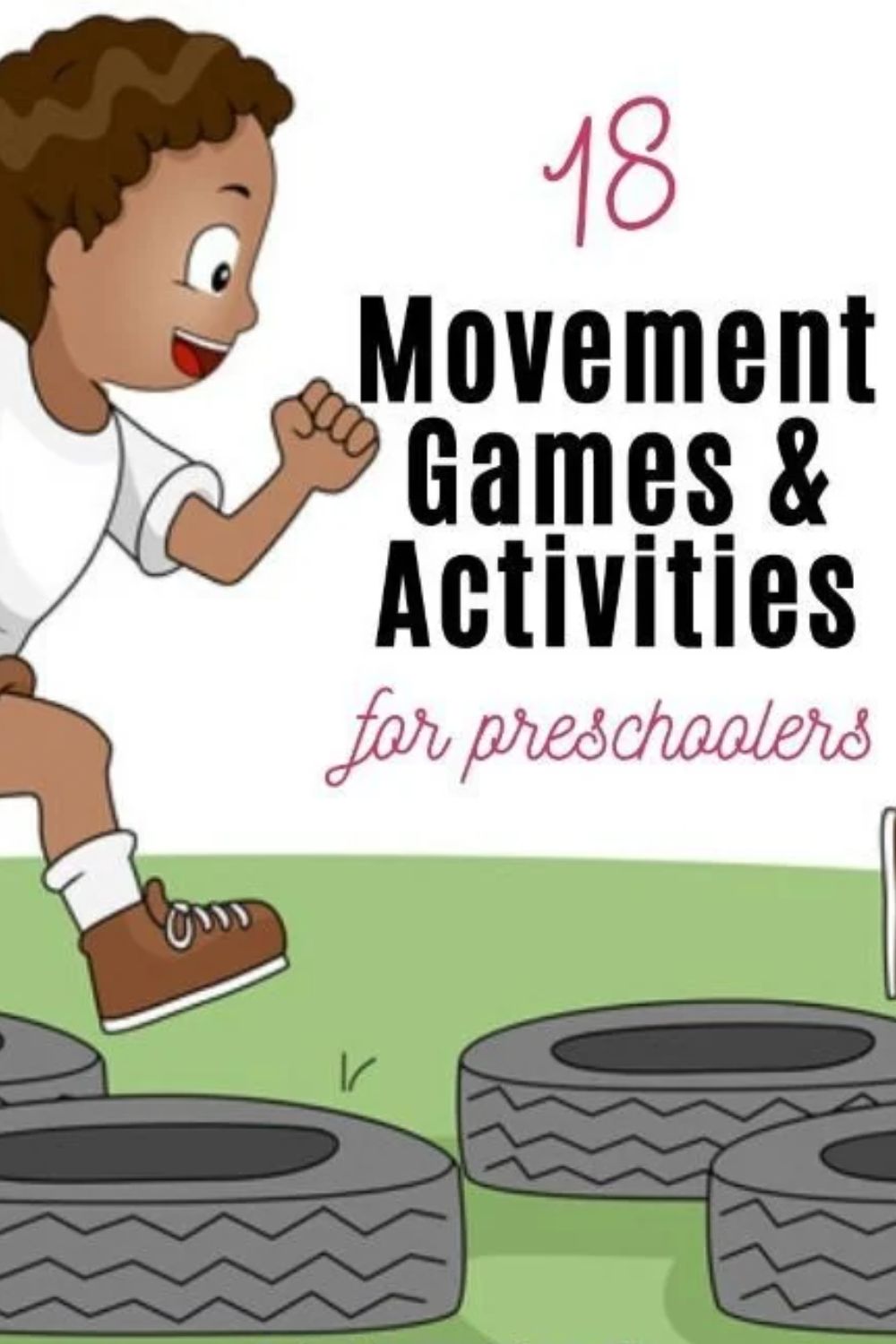
Movement is an important part of early childhood, helping children build strength, coordination, balance and body awareness while giving them plenty of opportunities to practise listening, following instructions and playing with others.
Here are 18 simple movement games and activities for preschoolers to get children active indoors or outside.
1. Obstacle Course
Set up your own obstacle course in the garden and get those large muscles working.
With a bit of imagination, you can set up a course out of waste materials or things found around the house and garden. Change them regularly to make the challenge more interesting.
Here are some ideas for your obstacle course:
- Old tyres to jump into or climb over
- Boxes to climb into or use as tunnels to crawl through
- Planks of wood as balance beams
- Tree stumps
- A ladder laid down on the ground (to hop into)
- Plastic cones (or bottles filled with sand) to weave through

2. Simon Says
Simon Says is a fun game of following instructions that are usually movement based.
One person is nominated to be Simon and must give instructions that the rest of the players must follow. However, they must only carry out the instructions that begin with “Simon says…” and not follow instructions that do not begin with the words “Simon says”.
Although this game primarily develops listening and attention skills, it is a great opportunity to build gross motor skills too.
Here are some fun Simon Says ideas with a special section of commands that will work the larger muscles.
3. Move Like an Animal
This activity promotes fantasy play and thinking skills, along with building gross motor skills.
Choose different animals and pretend to move like them. Take turns guessing what animal the other person is.
Try suggesting different categories to make it more challenging, such as animals that jump, fly or run.
Here are some creatures to try to imitate:
- Tortoise
- Crab
- Elephant
- Seal
- Snake
- Butterfly
- Rabbit
Crawling, jumping and moving like different animals also provide plenty of proprioceptive input through the muscles and joints. See these proprioceptive activities for children for more ideas.
4. Hopscotch
Hopscotch is an old favourite and one of the best active games for kids.
It teaches balance, eye-foot coordination and even some early maths skills.
5. Red Light, Green Light
Choose one child or adult to be the caller and have the other children stand a short distance away.
When the caller says “Green light!”, everyone moves forward. When they say “Red light!”, everyone must stop and freeze.
Keep playing until the children reach the caller, then choose someone new to lead the game.
You can also add “Yellow light” for slow walking, or try some of these other Red Light, Green Light variations to keep the game interesting.
6. Catch Bubbles
Kids love the thrill of chasing bubbles around the garden or playground. This activity doesn’t have to be reserved for only toddlers.
Make a game out of it and see how many bubbles your kids can pop each time you blow out a set. This is excellent for practising eye-hand coordination.
If you are playing with a few children, make a rule that each child must catch one bubble and two children can’t touch the same bubble.
This will work on reflexes and teach children to make quick decisions and move their bodies through space carefully.

7. Follow the Leader
Choose one child or adult to be the leader and have the other children line up behind them.
The leader moves around the space using actions such as hopping, tiptoeing, marching, stretching or waving their arms, while everyone else copies the movements.
Change leaders regularly so several children get a turn to choose the actions.
For more variations and ideas, see how to play the Follow the Leader game.
8. Freeze Tag
In this version of tag, as you catch and tag someone, they must freeze until someone else touches them and they are unfrozen.
This is best played with the whole family or class.
Chasing games teach children to move their bodies in space effectively (not bumping into people and objects as they move) and improve their speed and reaction time.
9. Jumping on Paper Plates
Lay some paper plates outside – fairly close together – and pretend to be frogs jumping on lily pads, or animals crossing the river by jumping over rocks.
As your children’s balance and coordination improve, move the plates further apart and in various directions so they have to map out a safe path.
10. Bean Bag Games
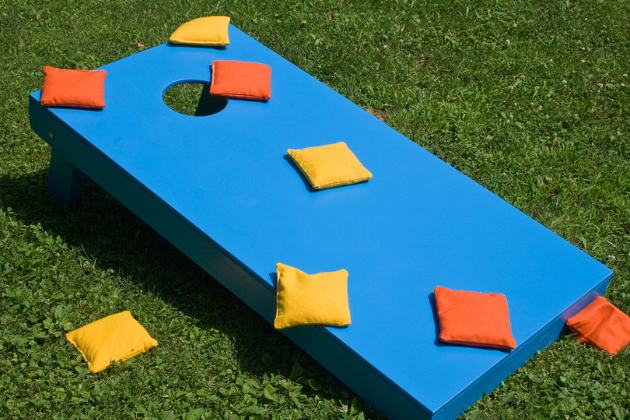
Bean bags are found in every preschool, and for good reason. They are an excellent resource for practising motor skills and you can use them in multiple ways:
- Throw and aim beanbags into laundry baskets
- Balance them on your head, or the back of your hand, while walking along a rope
- Throw them and mark how far they landed, trying on each turn to throw them further
- Crawl with a beanbag balancing on your back
- Throw and catch a beanbag
- Play bean bag toss (cornhole game)
Here are more bean bag activities to try.
11. Tightrope Walking
Lay a rope or line of tape along the floor and invite children to walk along it carefully, placing one foot in front of the other.
Try making straight, curved or zigzag paths, or use a low balance beam if you have one available.
Children can stretch their arms out to the sides to help them balance.

12. Rolling Around
Pretend to be logs of wood and, with arms stretched overhead, roll around the grass. Then move your hands to the sides and roll around.
Rolling stimulates the vestibular system, which helps children develop their sense of movement and balance. Here are more vestibular activities for preschoolers.
If you have a sloped garden or can find a grassy bank at a park, rolling downhill is lots of fun too.
You can also lay a blanket on the grass, hold one end, then ask your child to lie on the other end and roll themself into the blanket, then back out again.
13. Jump Rope
Lay a skipping rope on the ground and let children practise jumping forwards, backwards and from side to side over it.
For another challenge, have an adult hold one end of the rope low to the ground and gently move it from side to side while children try to jump over it.
For more ideas, try these jump rope games for kids.
14. Hula Hoop Games
Try some of these hula hoop games for kids, starting with the classic challenge of spinning a hoop around the hips.
This takes coordination and plenty of practice, so younger preschoolers can simply explore different ways to move with the hoop, such as rolling it, stepping through it or jumping in and out of it.
Older preschoolers can practise keeping the hoop spinning for longer and challenge themselves to beat their previous time.
15. Long Jump
Have a long jump competition with your children. You are not competing against each other but against your own records.
Mark off a starting point. Jump off the starting point and put a piece of tape where you land.
Then keep trying to beat your record, moving the tape each time you go further.
Take turns trying to better your own distance.
16. Balancing Challenge
See how long children can balance on one foot, then switch to the other side.
Try different positions, such as stretching the arms out wide, placing hands on hips or lifting one knee higher.
Children who are already confident can try slightly harder variations, such as balancing on a cushion with close supervision.
Here are more balancing activities for preschoolers to try.
17. Ladder Jumping
Lay an agility ladder flat on the ground, or make your own with chalk or strips of tape.
Invite children to jump into each space with two feet, then try variations such as hopping on one foot, jumping sideways or moving in and out of the spaces.
Keep the ladder flat on the ground and adjust the movements to suit the children’s abilities.
18. Movement Listening Game
Play a movement listening game that involves listening carefully to and remembering multiple instructions.
Make up a series of silly instructions – such as "jump up three times, run around the tree and hop back with feet together" – and see if your kids can do them in the correct sequence and remember them all.
Start with only two instructions for younger children and dd more as their age and skill level allow.
As you can see, finding ideas for movement activities for kids does not have to be complicated.
Simply use your imagination and whatever objects and tools you have lying around and create a quick, basic game.
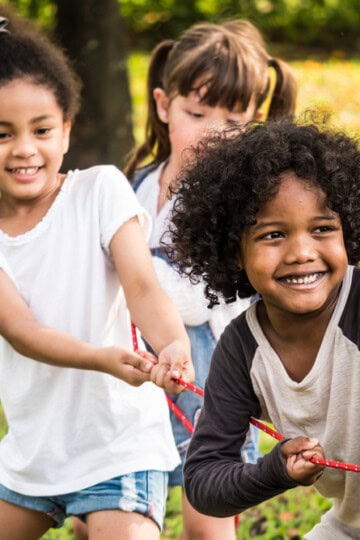
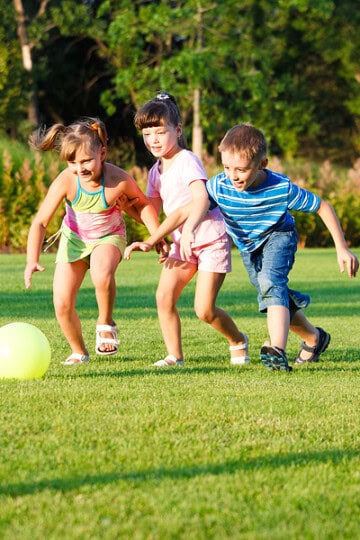
Activities like these are perfect for encouraging kids to have fun and to develop physical strength. Thanks for sharing these ideas, they are very interesting!
Thanks for your comment! Enjoy the activities.
I will look forward to working on it that is amazing.
Enjoy trying these activities, Susan!
This is really educative,really love it
Thanks for the feedback Loide!
Will support our work with the pre school age group
Glad you found this helpful Joan!