
The 5 Activities Preschoolers Should Do Every Day
The early years are a time when children are learning and growing at a rapid rate. As a parent or teacher, you may want to know what is the best way for your children to spend their time.
Here is a breakdown of the five best activities for early childhood development.
When does most of the learning occur and what are the best activities for young kids to be doing in order to learn optimally?
The answer is simple.
Play!
If children are spending the majority of their time playing every day, you can rest assured they are learning.
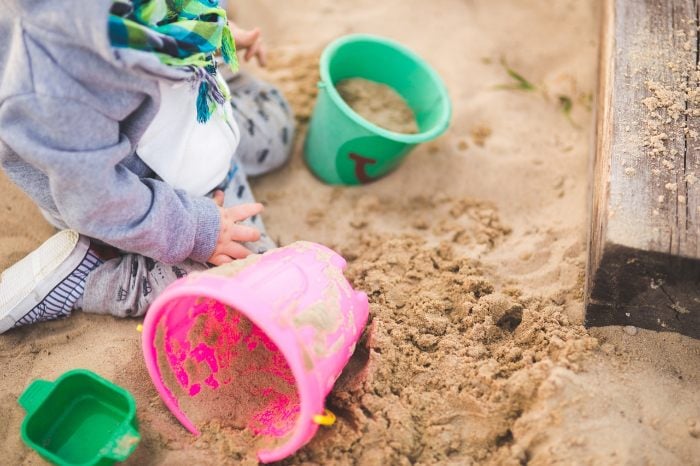
Read on to find out about simple play opportunities you can set up that your children will benefit from doing every day.
The preschool years are for play. Very intentional play.
During these years, all the most important foundations are being laid down and the skills needed for formal education are being put in place.
Most activities do not involve academic work or worksheets (as they are not really developmentally appropriate for preschoolers), and they can be categorized loosely into about 5 different types of activities.
They are all centred around play and they are the activities that all good preschools have built into their daily programs.
5 Early Childhood Development Activities
P.S. For simple play-based ideas that strengthen these early skills, the Learning Through Play Activity Pack is a great place to start.
If you are looking for early childhood development activities to do at home or in class with your kids, as long as they fit into one of the following categories, you will know they are age-appropriate and educational.
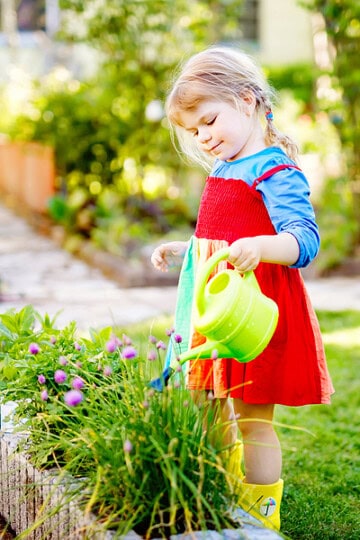
1. Movement Activities
Movement involves free play, which gives children time to run, skip, throw, catch, gallop, jump, hop, bend, balance, walk, climb, hang, etc.
Guided movement activities are also great and can be planned by adults with a specific purpose in mind. Here are some examples:
- Obstacle courses
- Balancing beams
- Throwing and catching games
- Hopscotch, leapfrog, etc.
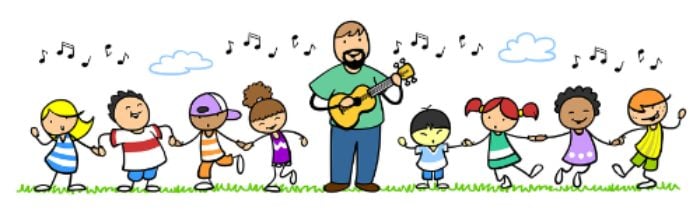
2. Music Activities
Music involves activities such as:
- Learning simple nursery rhymes and poems
- Singing songs
- Playing with musical instruments (especially home-made ones)
- Discovering sound through body percussion
- Dancing and rhythmic moving - also develop gross motor skills
- Playing music games
Music is not just about learning to sing and play instruments.
Through music, children improve their vocabulary, memory, cognitive abilities, listening skills, auditory processing skills, rhythm, and many more things.
Many of these skills are needed to be able to learn to read.
Children are naturally drawn to music and enjoy it without the self-consciousness that many adults feel when singing and dancing.
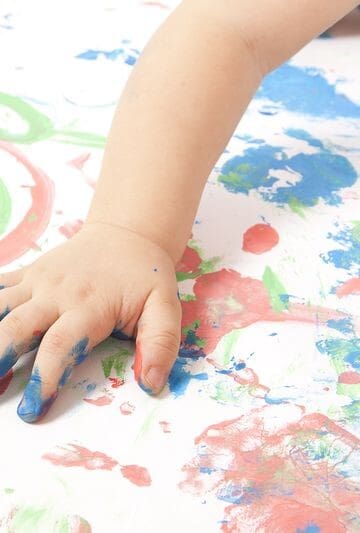
3. Creative Art
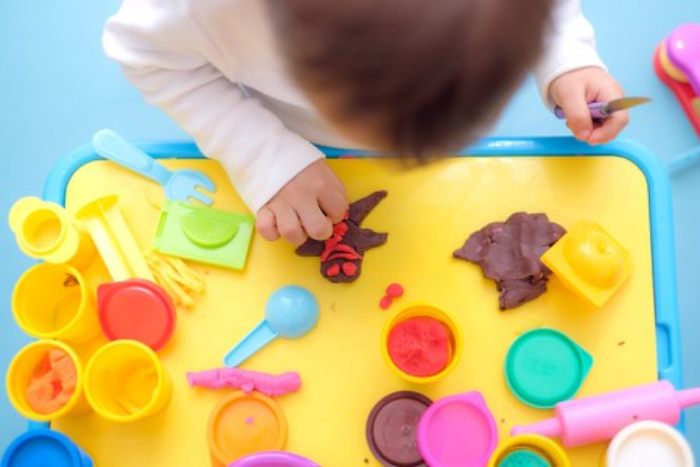
Which child doesn't love art? Most children want to draw, paint and be creative every day.
They should have exposure to many different activities and mediums:
- Drawing with wax crayons, pencils, pens, chalk, etc.
- Painting - including finger painting, stamp painting, painting with brushes and sponges, etc.
- Box construction - such as building things out of waste materials
- Cutting, tearing, pasting and collaging
Here are some really awesome creative art activities that are simple and require no prepping!
4. Reading
The benefits of reading to children are endless and bedtime stories should be a non-negotiable, every single day.
Parents and teachers should read to children in order to develop many skills.
It is also a great time to stimulate higher-order thinking skills and get your children involved in a discussion that is sure to develop critical thinking and vocabulary.
5. Play
I've left the best for last. Although the four activities listed above are still part of play, I thought I'd list this separately just to mention the various types of play children engage in.
During play, children are learning non-stop! Here are some types of play:
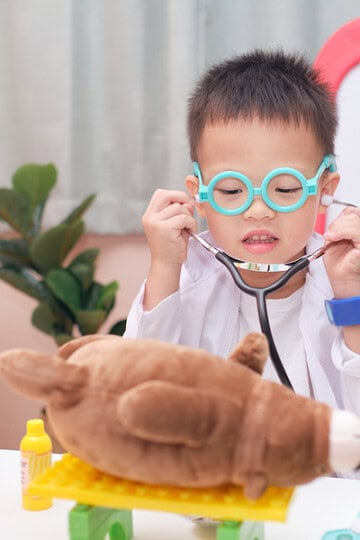
- Fantasy, dress-up or symbolic play
- Physical play
- Structured games with rules, such as Duck, Duck, Goose
- Memory games and card games.
- Construction play (e.g. building with blocks or lego)
- Sensory play
- Fine motor play activities such as puzzles, pegboards and threading beads
Above all other activities, children need large pockets of time to play daily. Play is how they discover the world and make sense of it.
Looking for simple, ready-to-go play ideas?
The Learning Through Play Activity Pack gives you quick, low-prep activities with real developmental benefits — ideal for busy parents.
👉 Have a look inside
What About Learning Numbers and Letters in Preschool?
You may be concerned with whether your children are learning letters and numbers, or reciting the days and months in order.
During the preschool years, learning the letters and numbers is not quite as important as you might think!
Why? Because your child will learn those things easily when they are ready. And they will be ready because they will have engaged in the right activities that develop pre-reading, pre-writing and early maths skills.
Here is a quick look at learning numbers and letters.
Learning Numbers
A child may count to 100 but they are not necessarily mature enough to have any concept of what those numbers actually represent.
They learn the value of numbers when playing, for example, in the sandpit or the bath.
When they fill up a cup of sand and turn it over, then fill another and turn it over next to the previous one, they are learning concepts such as two items or one more.
The more they play and discover, the more concepts they learn - they compare numbers, make patterns and experiment with sizes.
They may be able to rattle off the numbers out loud, but this is only one aspect of mathematics - rote counting.
Children develop a true sense of numbers when they learn one-to-one correspondence and conceptualize what the numbers actually mean.
Learning Letters
In order for children to recognize the sounds in letters, they need to develop their auditory processing skills through play.
Nursery rhymes, poems and songs serve more of a purpose than just entertainment and fun!
Then, learning to write requires building gross motor skills through movement and play.
Fine motor skills are then developed which enable a child to hold a pencil, control it and form letters carefully.
These foundational skills cannot be rushed and pushed aside.
The last level is being able to recognize the letters and the sounds they represent when combined, and putting them together into meaningful words and sentences to be read.
Therefore, it is not necessary for children to be writing, adding numbers and reading in preschool.
Know that if your children are coming home from school looking like they rolled in mud, with art that doesn't resemble anything Instagram-worthy and happily signing a tune, they are probably getting a very good education.
Homeschooling? Stick to these main types of activities to help your kids thrive.
Thanks
Thanks for reading, Kate!
Thank you very much
I'm adopting these activities in my teaching skills
That's wonderful, Mary! You're welcome.
Hi! I want to leave my opinion about developing children.
I’ve a little son and I’m very serious about his development. Nowadays when internet, smartphones and so on are everywhere and make people to degrade the most necessary things are developing and critical thinking. I thank you very much for your advices, which I’ll using for my son’s growth. All the best!
Thanks for your comment, John!
This opened my eyes,very helpful in our school we are using ACE so I didn't understand why I they saying Pre RR and Grade R they are not supposed to write anything now I get
i like this so much; thenk you so much for this
Thank you!
Hi Tanja, thanks so much for your write-up. It has really happened during my research assignment. Thanks.
You're welcome! Thanks for reading.
Thank you so much for reinforcing what I already knew, but began to doubt was the best for my granddaughter. I got caught up in "educational" programs, books, activities, etc., I was forgetting about the CHILD, and not what she can perform academically for the adults in her life. THANK YOU again!!!
Thank you for your comment Linda. It's so easy to get caught up in formal activities where we can "measure" how many things a child can do. We can "test" how many numbers they know, for example, but the funny thing is they're building a real number concept by playing with cups and making mudcakes in the sandpit, which is far more relatable to a young child than memorising random numbers and repeating them to an adult. Those play experiences are what actually shape their basic understanding of mathematics and other skills, and they determine how well a child will cope in the formal grades. Enjoy getting back to the business of play with your granddaughter!
i totally agreed with you Tanja . nowadays schools and parents think they have to rush so much information into kids, not even looking if they are ready or not. and they are forgetting that they are learning so much in the small and simple ways and that the most important part of being a child, is the feeling of freedom and be happy. they have the rest of their lives to learn the rest. and i havent started with the subject of Emotional Intelligence
Totally agree!
Hello. I was wondering what type of creative art you would recommend for 1 yr olds?
Hi Catrina,
Here is an article I found that links to over 60 creative and sensory ideas! They are great. As long as you provide your 1-year-old with different materials and mediums - you can let them explore just about anything, without needing to create a finished art product. Don't be afraid to use lots of water and sand and enjoy some messy play. https://viewsfromastepstool.com/activities-your-one-year-old-can-do-too/
Great article. Adults should also do these 5 activities everyday. I am a Librarian and wanted to let you know that ABCmouse allows libraries to offer it's content for free inside the Library. If your preschooler really wants some computer time, take them to the local library, play for a bit on ABCmouse and then check out some new books to read.
Hi Michelle, thank you. You're absolutely right - adults would also benefit! I didn't know that ABC Mouse offered that. Thanks so much for sharing. I wish kids spent more time in libraries so hopefully, that'll inspire some parents to let their kids visit a library.
Hello Tanja,
ThAnk you for this wonderful blog.
All I would like to know is that is it okay if I am reading to my kid everyday a different piece or should it be same?
Hi Disha,
Thanks so much! Reading to your children is so good for them and they will learn so much. It really doesn't matter if it's the same or a different book. There are benefits to both. Most children enjoy hearing their favourites repeatedly. They will be learning a lot from new content and repeated content.Here is an article on the benefits of reading:
https://empoweredparents.co/10-huge-benefits-reading-children-every-day/
Tanja