
The 6 Fascinating Stages of Drawing Development in Children: 0-6 Years
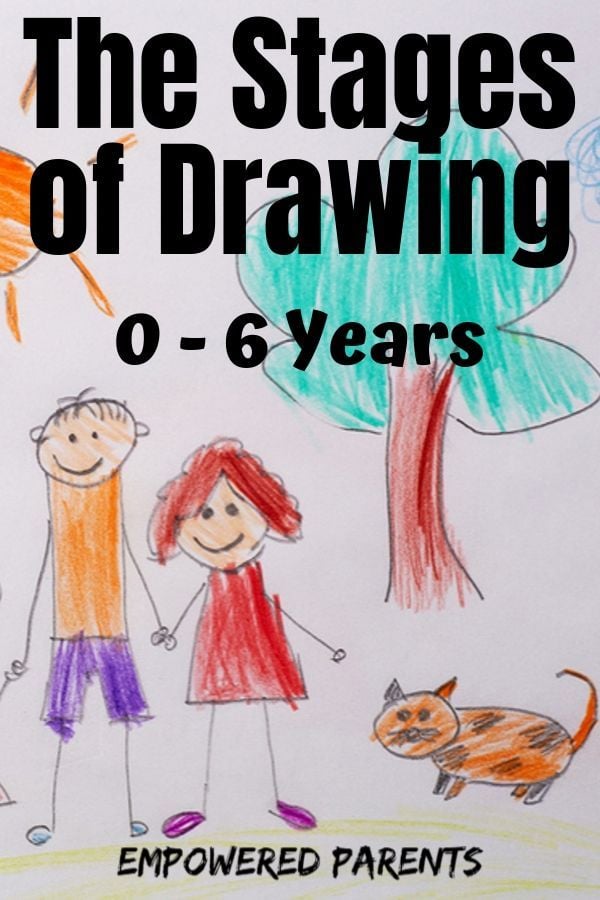
Here is a brief overview of the stages of drawing in early childhood development and why it's important to encourage young children to draw.
Drawing is a natural process for all children. From infancy, children begin by experimenting with drawing tools and making marks on paper, and as they grow, these marks start taking on meaning.
Drawing ultimately becomes a child’s way of expressing their understanding of the world and all the things that are important to them.
The Stages of Drawing Development
Here are the characteristics of the various developmental stages of children’s drawings - listed by age, followed by the reasons drawing is important.
These stages are not set in stone as children develop at their own unique pace. However, they all progress through the stages, which are based on their level of understanding.
Keep reading to grab your free printable with all the stages.
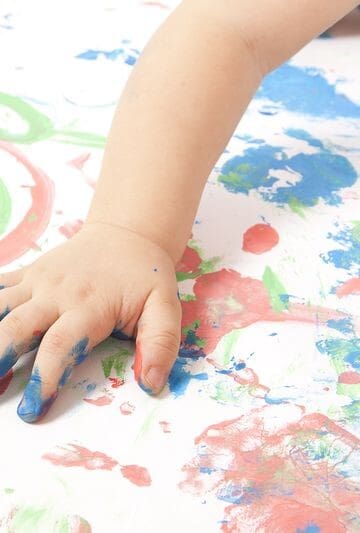
12 Months: Random Marks and Scribbles
The first stage of drawing is about exploring and developing motor coordination.
At around 15 to 18 months babies begin to develop uncontrolled scribbles that don’t represent anything.
Shapes
Babies begin by making random marks and soon begin to form:
- scribbles
- vertical and horizontal lines
- multiple line drawings
Understanding
For babies, drawing is really about learning cause and effect and their ability to make things happen.
It has little to do with creating and representing their world, and more to do with enjoying their movements and the effects of them.
Their scribbles enable them to learn about the properties of objects, materials and tools such as pencils, pens, paint, crayons and paper.
Grip
From around 15 months of age, toddlers are usually able to grasp crayons with their whole hand (called a palmar grasp).
2 Years: Controlled Scribbles
This stage is known as controlled scribbling.
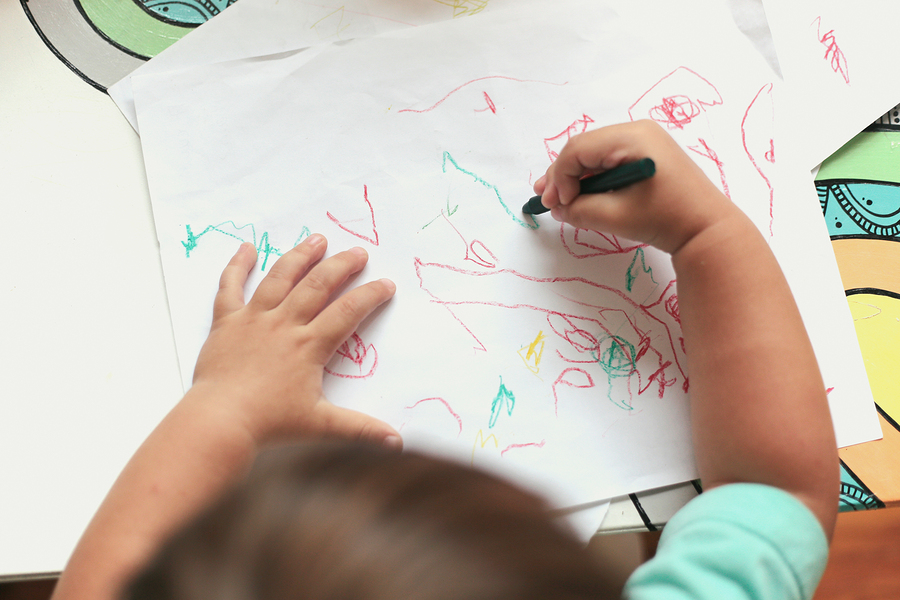
A 2-year-old's drawings are characterized by spontaneous circular or to-and-fro scribbles and dots.
Similar scribbles can be found in all children’s drawings at this age and the shapes in them are necessary for developing drawing and writing skills later on.
Shapes
Toddlers begin to make drawings that include:
- horizontal and vertical lines
- multiple loops and spirals
- roughly drawn circles
- shapes that resemble letters T and V
Grip
Two-year-olds learn to hold a pencil well down the shaft towards the point, using their thumb and first two fingers (called a tripod grasp).
They will usually use their preferred hand.
Understanding
At this age, toddlers begin to discover the connection between the movements they make and the marks that form on the paper. They will begin to repeat movements on purpose.
By the end of this year, these drawings evolve into simple diagrams.
3 Years: Basic Shapes
During this stage, children begin to use basic shapes in their drawings as their fine motor control and hand-eye coordination improve.
Shapes
A 3-year-old's drawings include the following shapes, combined in different ways:
- circles and squares
- crosses
- dots
- shapes that resemble letters T, V and H
Drawing of a person
The first drawing of a person usually emerges around 3 or 4 years of age.
These cute ‘tadpole’ people are drawn with just a head and usually legs directly attached to the head.
Grip
A 3-year-old holds a pencil near the tip, between the first two fingers and the thumb.
They use their preferred hand and hold the pencil with good control.
At this age, you can help your child develop a good tripod grasp by using triangular crayons.
Understanding
At this age, children are able to tell you what their scribbles represent, although you may not be able to see what they have described.

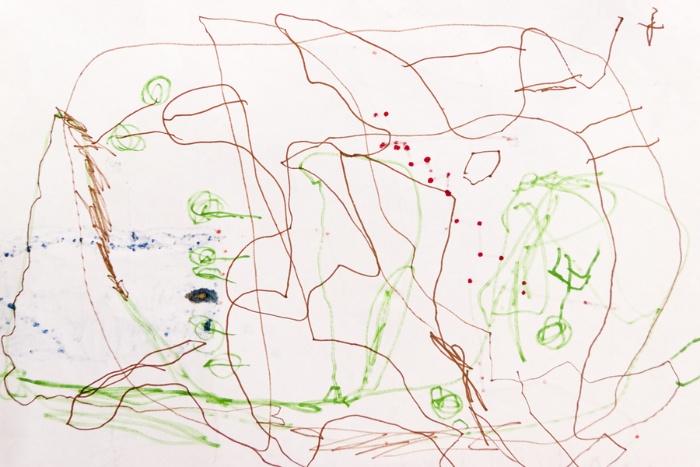
They usually name their picture while drawing it or after it is complete, but they do not start a drawing with a clear plan for what they will draw.
The use of colour at this stage is unrealistic and they often prefer to use only one colour.
Looking for simple, ready-to-go play ideas?
The Learning Through Play Activity Pack gives you quick, low-prep activities with real developmental benefits — ideal for busy parents.
👉 Have a look inside
4 Years: Patterns and 'Tadpole' People
Patterns start emerging in a typical 4-year-old drawing. A child will make a pattern and interpret it as a representation of something, giving it a label.
Shapes
Their drawings include:
- Squares, circles and rectangles
- Attempts triangles and diamonds, although they may not be able to form them yet
- Crosses
- Letters (pretend writing)
Drawing of a person
A 4-year-old’s drawing of a person will progress from a head with legs to include details such as eyes - since eye contact is important to them.
They draw not what they see, but what they know, and will add details as they become important to them.
Details such as arms, fingers and a trunk emerge.
Drawing other images
By 4-and-a-half years, they begin to combine two or more shapes or forms together to form basic images, such as a rectangle and a circle to form a hat. They often learn this from adults.
The first shapes children make consistently will usually form people, but later includes basic images such as a house or sun.
Grip
At this stage, they hold a pencil with good control, in an adult fashion.
Understanding
Drawing takes on more meaning and intention. Children usually decide what they are going to draw before they begin.
They deliberately try to combine shapes and lines together and their pictures start to look like the images they describe.
5 Years: Pictures and Portraits
5-year-olds begin to show much creativity in their drawings.
Shapes
A typical 5-year-old's drawing will include:
- Basic shapes
- Triangles and diamonds
- Spontaneous letters (to imitate writing)
Drawing of a person
A portrait of a person emerges, with many details such as hair, hands and fingers, feet and a body.
Drawing other images
They draw images such as animals, houses, vehicles, trees, plants, flowers and rainbows.
They are able to include details - such as drawing a house with a door, windows, roof and chimney.

Grip
By 5 years of age, children should have developed good control when holding a pencil, crayon or paintbrush.
Understanding
Children will now draw spontaneously and begin to show their own backgrounds, interests and experiences in their drawings. They draw what they know.
Their representation of people, animals and houses changes constantly.
They will also name their picture before beginning.
They can colour within the lines but their use of colour may still be unrealistic.
At this point, people and objects may still be floating in the air as children are still developing spatial perception.
They usually place themself in the middle of a drawing due to their egocentric nature (seeing themselves as the centre of the world).
6 Years: Drawings Represent Interests and Experience
By 6 or 7 years, children have their own style of drawing, which can usually be recognized by adults.
Shapes
By the time they are 7, they will be able to form good circles, squares, rectangles, triangles and diamonds in their drawings.
Drawing of a person
A child usually settles on a certain representation of a person at this age and tends to draw them all with the same basic shape.
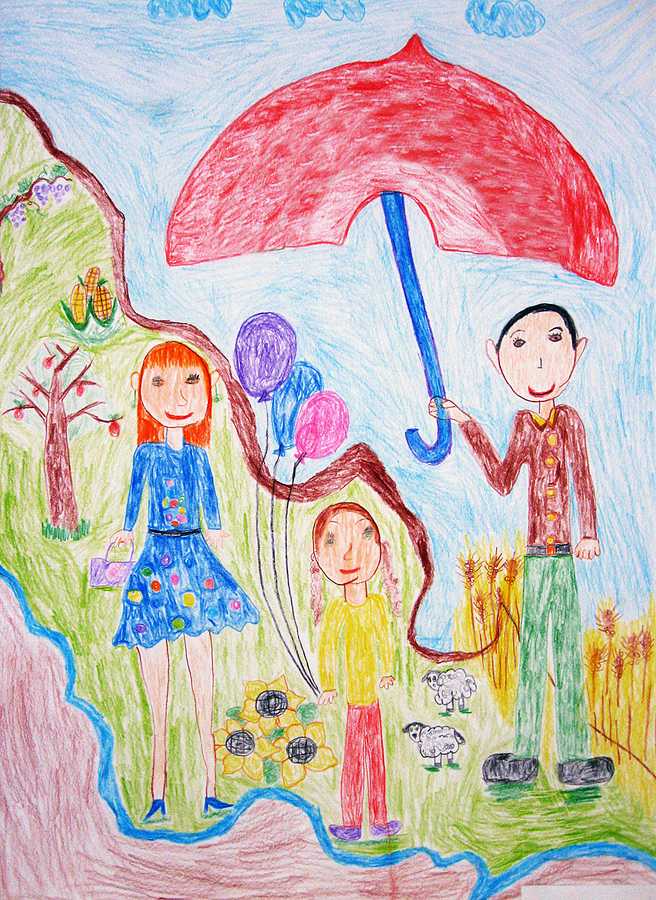
For example, they will draw the whole family with the same body outline but will make the members of the family different sizes and show gender with hair and clothes.
Drawing other images
A 6-year-old's drawing represent all kinds of animals and things, usually those that interest them the most.
They tend to draw animals with human-like faces.
Understanding
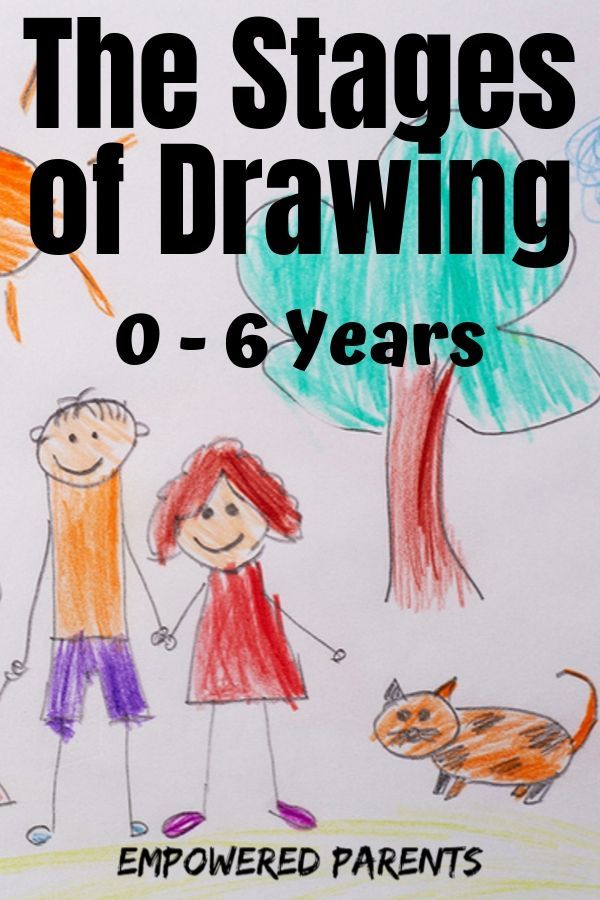
At this stage, children show their higher level of cognition by drawing people, animals and objects on a baseline, such as on the ground or grass.

They also show perception by drawing, for example, trees higher than the house or flowers that are small.
This drawing shows a child's greater understanding of depth and distance.

The way they see the world comes through their drawings. They leave out unimportant things and enlarge things that are important to them.
They may draw a small door on a house, just big enough for themselves, or very high windows, since they cannot reach them.
They can also show movement in their drawings by portraying objects that are flying or drawing the legs of an animal wider apart if running.
Their use of colour becomes quite realistic.
How to Teach a Child to Draw
During the early years, it is important to focus on the process of creative drawing instead of the product.
There is no need to formally teach children to draw. The best way to teach them is to give them exposure to materials and drawing tools and let them express themselves freely.
As they grow and mature, their drawings will become more detailed and reflect the world around them.
While using colouring books in small doses is enjoyable and still has some value, it's best to opt for free drawing, which has greater creative value.
P.S. For simple play ideas that build early drawing and fine motor skills, see the Learning Through Play Activity Pack.
Why Drawing is Important
There are many benefits of drawing during the toddler and preschool years.
- Drawing builds fine motor skills.
- It develops hand-eye coordination.
- It develops creative expression through free drawing.
- Drawing is the foundation of pre-writing skills.
- It develops attention span.
- It develops cognitive skills and understanding of concepts.
I hope you're inspired to encourage your children to do lots of free drawing and creative expression.
The Free Activity Pack below includes lots of fine motor activity ideas to help develop the skill of drawing, so don't forget to sign up for that!
The info in this article is based on “Language and School Readiness”, written by Martie Pieterse and “Learning Through Play: A Parent’s Guide to the First Five Years”, written by Jan Natanson.
The 6 Fascinating Stages of Drawing Development in Children: 0-6 Years
Notes
Here is a brief overview of the stages of drawing in early childhood development and why it's important to encourage young children to draw.
Drawing is a natural process for all children. From infancy, children begin by experimenting with drawing tools and making marks on paper, and as they grow, these marks start taking on meaning.
Drawing ultimately becomes a child’s way of expressing their understanding of the world and all the things that are important to them.
The Stages of Drawing Development
Here are the characteristics of the various developmental stages of children’s drawings - listed by age, followed by the reasons drawing is important.
These stages are not set in stone as children develop at their own unique pace. However, they all progress through the stages, which are based on their level of understanding.
12 Months: Random Marks and Scribbles
The first stage of drawing is about exploring and developing motor coordination.
At around 15 to 18 months babies begin to develop uncontrolled scribbles that don’t represent anything.
Shapes
Babies begin by making random marks and soon begin to form:
- scribbles
- vertical and horizontal lines
- multiple line drawings
Understanding
For babies, drawing is really about learning cause and effect and their ability to make things happen.
It has little to do with creating and representing their world, and more to do with enjoying their movements and the effects of them.
Their scribbles enable them to learn about the properties of objects, materials and tools such as pencils, pens, paint, crayons and paper.
Grip
From around 15 months of age, toddlers are usually able to grasp crayons with their whole hand (called a palmar grasp).
2 Years: Controlled Scribbles
This stage is known as controlled scribbling.
A 2-year-old's drawings are characterized by spontaneous circular or to-and-fro scribbles and dots.
Similar scribbles can be found in all children’s drawings at this age and the shapes in them are necessary for developing drawing and writing skills later on.
Shapes
Toddlers begin to make drawings that include:
- horizontal and vertical lines
- multiple loops and spirals
- roughly drawn circles
- shapes that resemble letters T and V
Grip
Two-year-olds learn to hold a pencil well down the shaft towards the point, using their thumb and first two fingers (called a tripod grasp).
They will usually use their preferred hand.
Understanding
At this age, toddlers begin to discover the connection between the movements they make and the marks that form on the paper. They will begin to repeat movements on purpose.
By the end of this year, these drawings evolve into simple diagrams.
3 Years: Basic Shapes
During this stage, children begin to use basic shapes in their drawings as their fine motor control and hand-eye coordination improve.
Shapes
A 3-year-old's drawings include the following shapes, combined in different ways:
- circles and squares
- crosses
- dots
- shapes that resemble letters T, V and H
Drawing of a person
The first drawing of a person usually emerges around 3 or 4 years of age.
These cute ‘tadpole’ people are drawn with just a head and usually legs directly attached to the head.
Grip
A 3-year-old holds a pencil near the tip, between the first two fingers and the thumb.
They use their preferred hand and hold the pencil with good control.
At this age, you can help your child develop a good tripod grasp by using triangular crayons.
Understanding
At this age, children are able to tell you what their scribbles represent, although you may not be able to see what they have described.
They usually name their picture while drawing it or after it is complete, but they do not start a drawing with a clear plan for what they will draw.
The use of colour at this stage is unrealistic and they often prefer to use only one colour.
4 Years: Patterns and 'Tadpole' People
Patterns start emerging in a typical 4-year-old drawing. A child will make a pattern and interpret it as a representation of something, giving it a label.
Shapes
Their drawings include:
- Squares, circles and rectangles
- Attempts triangles and diamonds, although they may not be able to form them yet
- Crosses
- Letters (pretend writing)
Drawing of a person
A 4-year-old’s drawing of a person will progress from a head with legs to include details such as eyes - since eye contact is important to them.
They draw not what they see, but what they know, and will add details as they become important to them.
Details such as arms, fingers and a trunk emerge.
Drawing other images
By 4-and-a-half years, they begin to combine two or more shapes or forms together to form basic images, such as a rectangle and a circle to form a hat. They often learn this from adults.
The first shapes children make consistently will usually form people, but later includes basic images such as a house or sun.
Grip
At this stage, they hold a pencil with good control, in an adult fashion.
Understanding
Drawing takes on more meaning and intention. Children usually decide what they are going to draw before they begin.
They deliberately try to combine shapes and lines together and their pictures start to look like the images they describe.
5 Years: Pictures and Portraits
5-year-olds begin to show much creativity in their drawings.
Shapes
A typical 5-year-old's drawing will include:
- Basic shapes
- Triangles and diamonds
- Spontaneous letters (to imitate writing)
Drawing of a person
A portrait of a person emerges, with many details such as hair, hands and fingers, feet and a body.
Drawing other images
They draw images such as animals, houses, vehicles, trees, plants, flowers and rainbows.
They are able to include details - such as drawing a house with a door, windows, roof and chimney.
Grip
By 5 years of age, children should have developed good control when holding a pencil, crayon or paintbrush.
Understanding
Children will now draw spontaneously and begin to show their own backgrounds, interests and experiences in their drawings. They draw what they know.
Their representation of people, animals and houses changes constantly.
They will also name their picture before beginning.
They can colour within the lines but their use of colour may still be unrealistic.
At this point, people and objects may still be floating in the air as children are still developing spatial perception.
They usually place themself in the middle of a drawing due to their egocentric nature (seeing themselves as the centre of the world).
6 Years: Drawings Represent Interests and Experience
By 6 or 7 years, children have their own style of drawing, which can usually be recognized by adults.
Shapes
By the time they are 7, they will be able to form good circles, squares, rectangles, triangles and diamonds in their drawings.
Drawing of a person
A child usually settles on a certain representation of a person at this age and tends to draw them all with the same basic shape.
For example, they will draw the whole family with the same body outline but will make the members of the family different sizes and show gender with hair and clothes.
Drawing other images
A 6-year-old's drawing represent all kinds of animals and things, usually those that interest them the most.
They tend to draw animals with human-like faces.
Understanding
At this stage, children show their higher level of cognition by drawing people, animals and objects on a baseline, such as on the ground or grass.
They also show perception by drawing, for example, trees higher than the house or flowers that are small.
This drawing shows a child's greater understanding of depth and distance.
The way they see the world comes through their drawings. They leave out unimportant things and enlarge things that are important to them.
They may draw a small door on a house, just big enough for themselves, or very high windows, since they cannot reach them.
They can also show movement in their drawings by portraying objects that are flying or drawing the legs of an animal wider apart if running.
Their use of colour becomes quite realistic.
How to Teach a Child to Draw
During the early years, it is important to focus on the process of creative drawing instead of the product.
There is no need to formally teach children to draw. The best way to teach them is to give them exposure to materials and drawing tools and let them express themselves freely.
As they grow and mature, their drawings will become more detailed and reflect the world around them.
While using colouring books in small doses is enjoyable and still has some value, it's best to opt for free drawing, which has greater creative value.
Why Drawing is Important
There are many benefits of drawing during the toddler and preschool years.
- Drawing builds fine motor skills.
- It develops hand-eye coordination.
- It develops creative expression through free drawing.
- Drawing is the foundation of pre-writing skills.
- It develops attention span.
- It develops cognitive skills and understanding of concepts.
I hope you're inspired to encourage your children to do lots of free drawing and creative expression.
The info in this article is based on “Language and School Readiness”, written by Martie Pieterse and “Learning Through Play: A Parent’s Guide to the First Five Years”, written by Jan Natanson.

This is an excellent article! I've always thought coloring books were developmentally inappropriate for toddlers. The stages of drawing seem to be spot on for my three and half year old. Thank you!
Thanks for reading, Laney!
This was interesting and helpful. My daughter is twelve now, but I was reviewing her work at three and in kindergarten. She had exceptional fine motor skills as a toddler and at three was drawing people with heads, torso, arms in correct proportions on the torso, legs, feet, hands, ears properly proportioned, eyes, eyelashes, mouth, nose, hair and uhhm- anatomically correct female parts, later covered by “clothes”.
At 6 she would draw people in excellent proportion, perspective, and detail, like a man behind a newspaper wearing glasses and with wrinkles. She drew a cat princess under an awning and made the whiskers behind the awning posts. Her self portrait was better than most 3rd and 4th graders drawings. Unfortunately she stopped drawing by the next year because she was so self critical and didn’t think her drawings were good enough/realistic enough. Recently, she started drawing and painting again. She is taking painting lessons and also creates original miniature 3D structures. We always knew she was gifted in this area but this helps identify specifics. We are excited to see where her art takes her.
Thank you for sharing.
Hi Missy,
Wow that is truly remarkable, especially her drawings as a 3-year-old. I do hope she continues on this path! Thanks for sharing.
@Missy, this happened to me too. I was considered a gifted artist as a child, but then as other children began to get as good as I was, falling into the background was really discouraging for me. I never completely stopped drawing but I didn't make much progress for many years. Now I'm kicking myself in the butt to make up for it! Self-study is really hard for me and that's all I have accessible to me. It just really warms my heart to hear that your daughter is also getting back into art. I hate how elitist everyone is about it, anyone can and should make art if they want to regardless of their skill level! I wish she had never felt so discouraged in the first place. Let her know a stranger on the internet is rooting for her, alright? Smiles
We interviewed a 10-year-old and one of the things that we made him do is to draw a person with at least 6 body parts and he was unable to perform this, what does this mean?
Hi there. Thanks for your comment. It is unusual at that age to not be able to draw a person with any details. If there are also other areas of concern, it is best to start with a general assessment by a professional who carries these out.
@Tanja Mcilroy, Hi! I know that ability to draw a person is a very important indicator of development, but how important is it really? And what about grown-ups who are unable to draw anything?
When I told my mother that I am worried that her 6-year-old granddaughter likes to draw, but doesn't like to draw people and that she draws people like a 3-year-old, very basic sketches, hardly more than matchstick men, my mother replied: "But what about grown-ups, huh? What about those grown-ups who cannot draw a person? Are THEY developmentally delayed? Stop criticising your girl!" I didn't know what to say to that! 😀
Hi Vita, thanks for your comment. People are always such a mixed bag of skills, interests. etc. The only time I'd ever worry about a child not following the "norm" with a particular milestone is if there are multiple areas where you have concerns. If you daughter is progressing well in most areas, I would agree with your mom that she's perfectly fine. It's possible that her not drawing details on a person could be an indication of her still developing body awareness, or maybe it has nothing to do with that at all. I write articles about improving skills in all developmental areas just to put the info out there, but no two children are ever the same and will develop stronger skills in some areas than others. Some children, for example, who don't fit the mould of the academic child go on to become brilliant anyway. As the parent, you'll know if something is off. My daughter is nearly 4 and is not drawing people yet, and I think she's brilliant 🙂 Take care
Hi, @Tanja! Thank you for the clarification! Happy New Year! 🙂
You too!
What should I do If my 4 and a half year old isn’t interested in drawing? I’ve tried many things but he tells me it’s boring. I don’t want to force him since It shouldn’t be an obligation but something he enjoys. Thanks!
Hi Camila,
It's best to make paper and drawing materials easily available in case he wants to draw, but not to push him in any way or ask him to draw. If you are concerned that he is avoiding many activities - such as fine motor or movement activities, it may be best to have him assessed for peace of mind. Sometimes avoiding certain activities can be an indication of other difficulties.
I love your articles and always waiting for it.Its really informative and helpful.
Thanks for reading Rupali!
Very interesting
Thanks Hendrene!
I used this for a school project and it was super helpful. Great information.
Thanks Ellie! I'm glad it was useful. Tanja
Thanks. This is very comfortable reading and very informative towards teaching preschoolers.
Thank you Marilyn. I'm glad this was helpful!
Thank you for the articles you have posted. I love reading them. They are easy to understand as English isn't my mother-tongue.
Thanks for your comment Suchittra. I'm glad you enjoy reading them!
Your resources are very interesting and easy to share with Parents thank you